
Alignment Is a Pattern of Decisions: How to Tell If Strategy Is Governing Execution
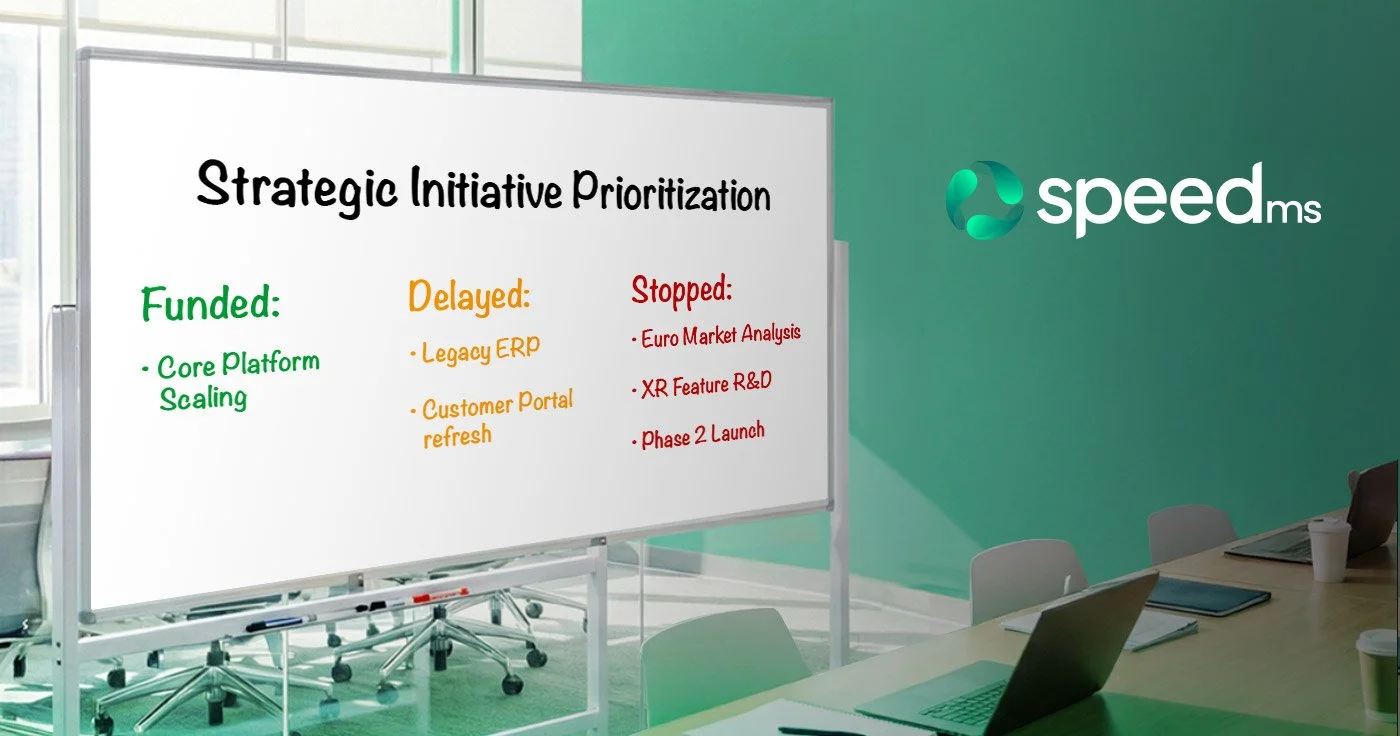
Alignment Is a Pattern of Decisions
Alignment often gets confused with agreement. The slides are clear. The strategy sounds sharp. Everyone nods in the meeting.
That’s not alignment.
Agreement doesn’t govern a business. Decisions do. Strategy only matters if it controls how capital is allocated and what work gets done — especially when there isn’t enough time, money, or capacity to do everything.
Alignment isn’t about culture. It’s about repeatable decisions. And you can measure it.
Alignment Shows Up in Allocation
You don’t find alignment in presentations. You find it in:
Where headcount actually went
Where budget actually moved
What made the roadmap
What didn’t
Trade-offs reveal truth. When capacity is tight and pressure increases, aligned companies don’t debate their priorities every time. Teams make reinforcing decisions without constant escalation because they’re using the same governing objective.
Over time, those decisions form a pattern. That pattern is alignment.
The Fastest Way to Test If Strategy Is Governing
Look at decision output — not stated intent. Ask yourself:
What got funded this quarter?
What didn’t — and why?
What was explicitly stopped?
Which trade-offs required executive override?
If everything is still running, strategy isn’t governing. It’s advising.
The Signal of Real Alignment
Alignment exists when different teams make the same trade-off in different rooms. Not because they coordinated in that moment. But because the governing objective dictated the choice.
Under constraint, aligned organizations show three behaviors:
They sacrifice in sync. Multiple teams delay similar categories of work to protect the primary objective.
They protect critical capital. “Good” projects lose funding so “critical” ones don’t.
They don’t need constant intervention. Leadership isn’t pulled into every decision because the logic is already clear.
When independent teams consistently reinforce the same direction under pressure, alignment exists.
How Drift Actually Happens
Misalignment rarely looks dramatic. It looks reasonable.
Product ships a safe feature to protect short-term metrics.
Sales leans into a legacy segment because it closes predictably.
Operations improves a process that probably shouldn’t exist next year.
Each decision makes sense on its own.
All of them are defensible. But they don’t compound. The business stays busy — but momentum weakens.
That’s drift. Drift isn’t conflict. It’s local optimization without a shared governing objective.
Three Signals You’re Drifting
New priorities get added without anything being removed. The portfolio grows. Nothing exits.
Teams optimize locally. Output increases, but direction doesn’t strengthen.
Leadership keeps getting pulled into repeat trade-offs. Because there’s no consistent decision logic underneath.
If everything is a priority, nothing is governing.
Agreement Is the False Signal
Agreement in meetings is easy. Stopping work is hard. Withdrawing funding from something that’s functioning — but not strategic — requires discipline.
Without that discipline, legacy work continues alongside new initiatives. Capacity fragments. Execution feels busy but not decisive.
Stopping work is the ultimate proof that strategy has authority. Not because it failed. Because it no longer fits.
Alignment Requires Cadence
Alignment doesn’t maintain itself. If you don’t regularly review decision patterns, the organization reverts to yesterday’s assumptions.
In companies where strategy governs, leadership cadence focuses on:
What did we choose not to do?
Has capital actually shifted?
Where are teams optimizing locally?
What needs to exit to make room for what’s next?
Alignment isn’t maintained through better communication. It’s maintained through recurring review of how capital and capacity are allocated.
What to Check This Quarter
If you want to know whether you’re aligned, look at your last 90 days:
Did independent teams make reinforcing trade-offs?
Did capital move away from legacy work?
Was anything intentionally retired?
Did you make real exclusions — or just express agreement?
Alignment is visible in what you stop. Markets reward concentration and consistency. Not activity. Strategy survives where decisions are reviewed in cadence — not declared in meetings.
Execution isn’t an event. It’s a rhythm.
